


Essays.
These essays are my attempt to understand what it means to become who we are capable of becoming. They are reflections on potential, action, regret, legacy, and the choices that shape a life.
The core philosophy is grounded in what I call Potential Debt: The accumulated cost of the life, opportunities, and capabilities we were capable of creating but repeatedly chose not to pursue.
I hope you enjoy them as much as I have enjoyed thinking about their subjects.
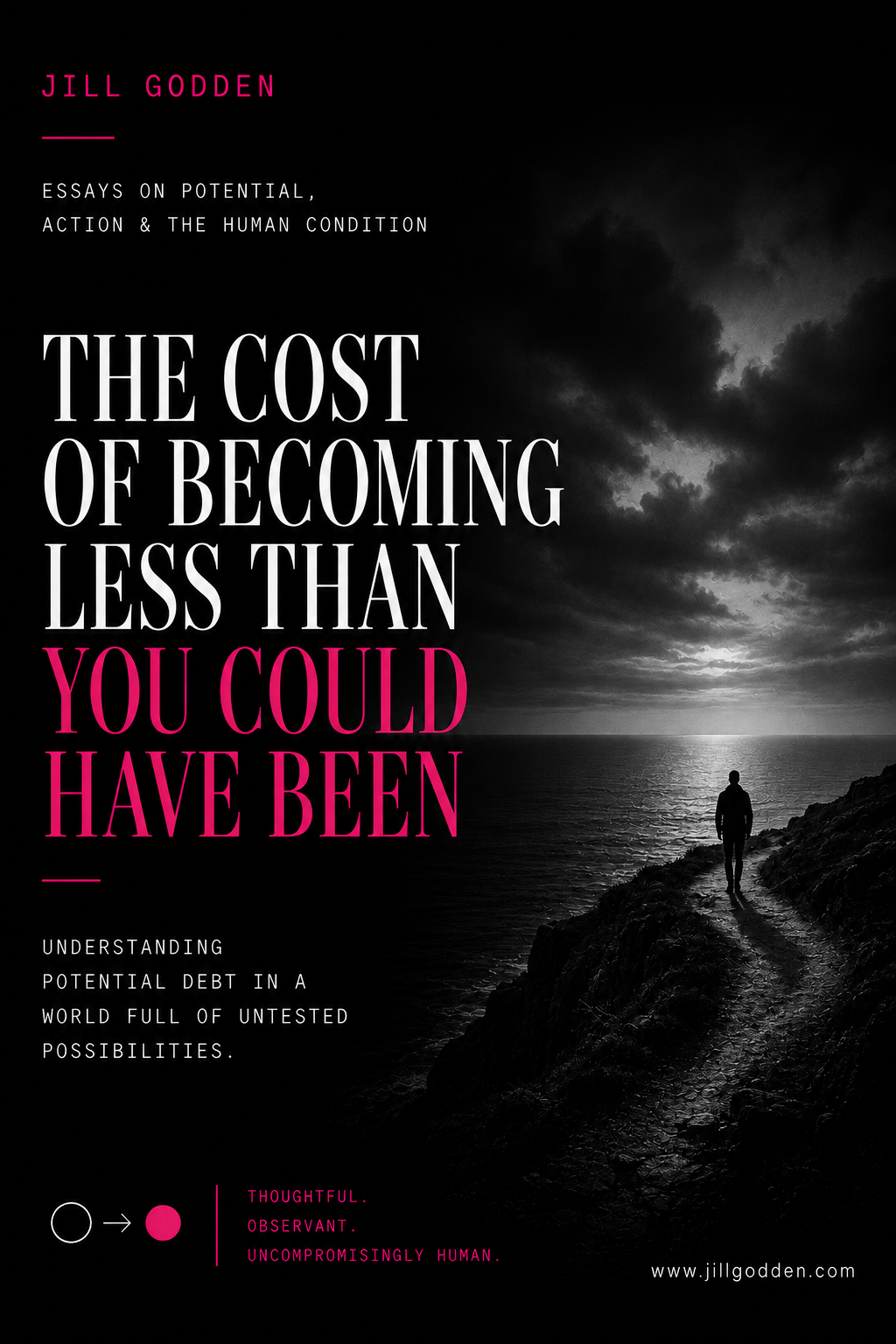
The Cost Of Becoming Less Than You Could Have Been
There is a peculiar feature of human life that receives remarkably little attention. Most people spend years worrying about the consequences of the decisions they make while giving almost no thought to the consequences of the decisions they avoid making. We are taught to think carefully about actions because actions produce visible outcomes. They create success or failure, gain or loss, progress or setback. Action leaves evidence. It produces stories that can be told and experiences that can be measured.
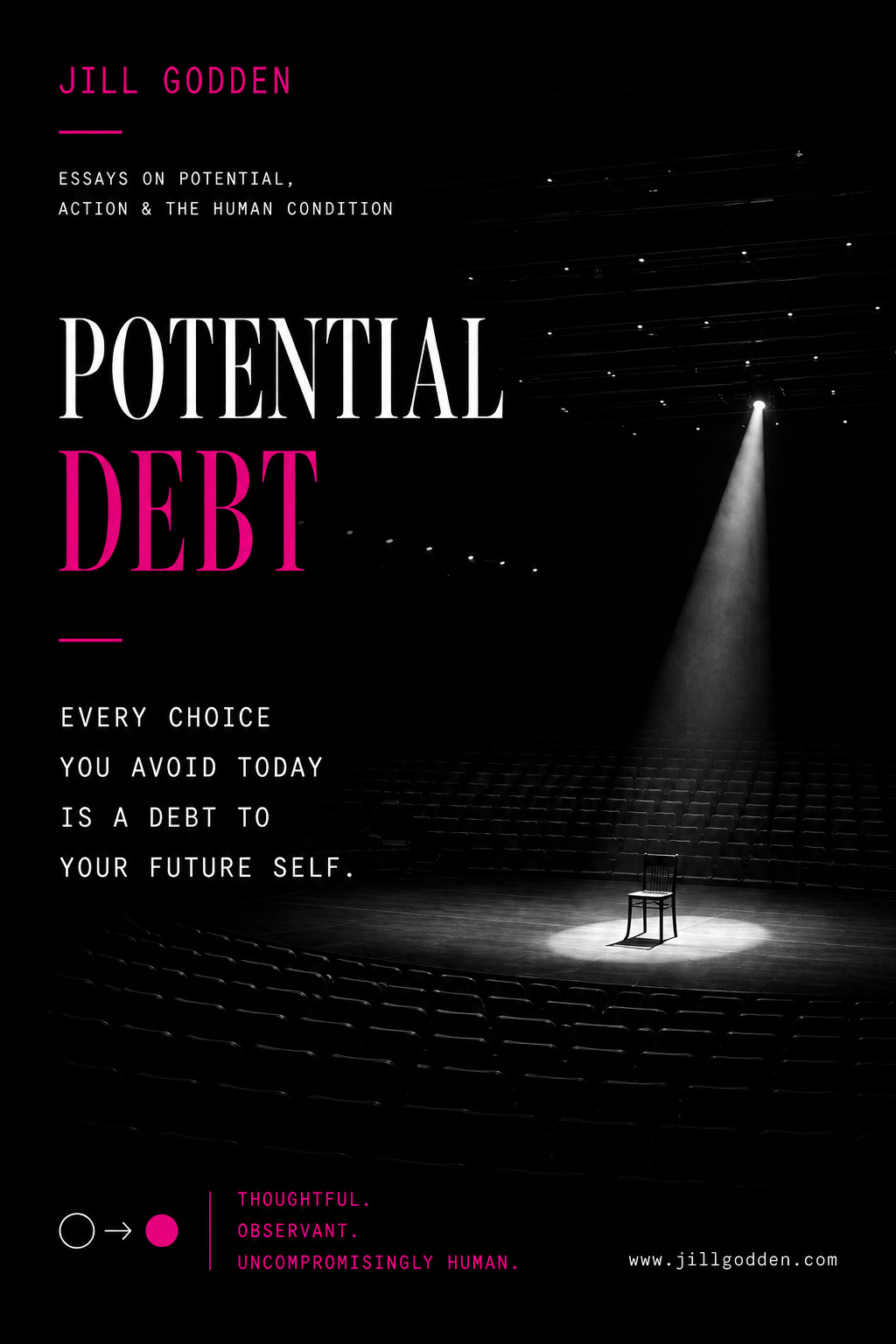
POTENTIAL DEBT
The Gap Between Who You Are and Who You Could Become.
Potential is not an asset. It is a responsibility.
Most people think potential is a gift. I think it is a debt. A debt owed to the person we could become, the work we could create, the businesses we could build, the lives we could change, and the opportunities we have been given but not yet acted upon.
Every one of us carries a vision of a larger version of ourselves. A healthier version. A braver version. A more disciplined version. A version willing to take the risk, make the call, write the book, start the company, or pursue the idea.
Most people never meet that person.
Not because they lack intelligence, resources or opportunity. They fail to meet that person because potential alone changes nothing. Action does. Over the years I have worked with founders, entrepreneurs, investors, authors, business owners, and people with extraordinary ideas. I have come to believe that the world is not suffering from a shortage of potential.
Potential may be the most abundant resource on earth.
What is rare is action.
FAQ
What is Potential Debt?
Potential Debt is the idea that unrealised potential carries a cost. It describes the gap between who we are and who we could become, and the responsibility we have to close that gap through action.
Why did Jill Godden create Potential Debt?
Potential Debt emerged from years of working with founders, entrepreneurs, investors and business leaders. Jill observed that talent, intelligence and opportunity are common, while meaningful action is far less so.
What topics are explored in the essays?
The essays explore potential, action, entrepreneurship, success, failure, regret, legacy, discipline, decision making, personal responsibility and human behaviour.
Who are the essays written for?
The essays are written for founders, entrepreneurs, investors, creators, leaders and anyone interested in understanding how people move from possibility to achievement.
What is the central philosophy behind Potential Debt?
The central belief behind Potential Debt is that potential is not an asset. It is a responsibility. The distance between possibility and action creates a debt that can only be repaid through deliberate effort.
Why do success and failure appear throughout the essays?
Success and failure are not treated as destinations. They are examined as feedback that reveals how people make decisions, respond to pressure and build meaningful outcomes over time.
Are the essays connected?
Yes. Each essay can be read independently, but together they form a broader body of work exploring human potential, action, entrepreneurship, regret, legacy and the choices that shape a life.
What does Potential Debt mean for entrepreneurs?
For entrepreneurs, Potential Debt represents the gap between an idea and its execution, between ambition and achievement, and between the company that exists today and the company that could exist tomorrow.